
1. Could you tell us how your journey with water sports and Wing started?
My journey with water sports began when I was 13. That’s when I first got on an Optimist dinghy and immediately felt that it was something that truly excited me. After winning the Polish Championship in that class, I decided to switch to windsurfing. I trained very hard, often in tough conditions, to win another Polish Championship the following season, this time in the Bic Techno 293 class.
Since then, my passion has only grown. Year after year I managed to keep up a winning streak, earning national titles in various classes. I kept switching gear and disciplines—from Olympic RS:X, to IQFoil, and eventually to foil Formula. Along the way, I had the chance to compete in the Youth Olympic Games in Argentina and win a few key international titles.
When I tried Wingfoil for the first time, I knew right away it was something fresh and full of potential. I was hooked immediately. Now Wingfoil is my main focus. I compete in the Wingfoil Racing World Tour, keep developing, and set higher and higher goals for myself.
Outside of sports, I study Environmental Development remotely at Mälardalen University in Sweden. I try to balance an intense sports lifestyle with my studies and everyday life, which mostly takes place in my camper van—wherever I happen to be at the moment.
If you’re interested in living with passion, water sports, and a slightly unconventional lifestyle, I invite you to follow my journey. The best is yet to come!!
2. How does your experience in windsurfing help you in Wing?
My windsurfing background helps a lot with wingfoiling, as both sports are quite similar in terms of riding technique and tactical principles. You need to know how to read the wind, position yourself well at the start, and respond to changing conditions. Wing requires a bit more physical fitness than IQFoil—especially strong legs, forearms, and core—but luckily I’ve always had an edge there thanks to years of training. All of that really translates into top-level performance on the water.
3. Which wings do you use for racing, and why?
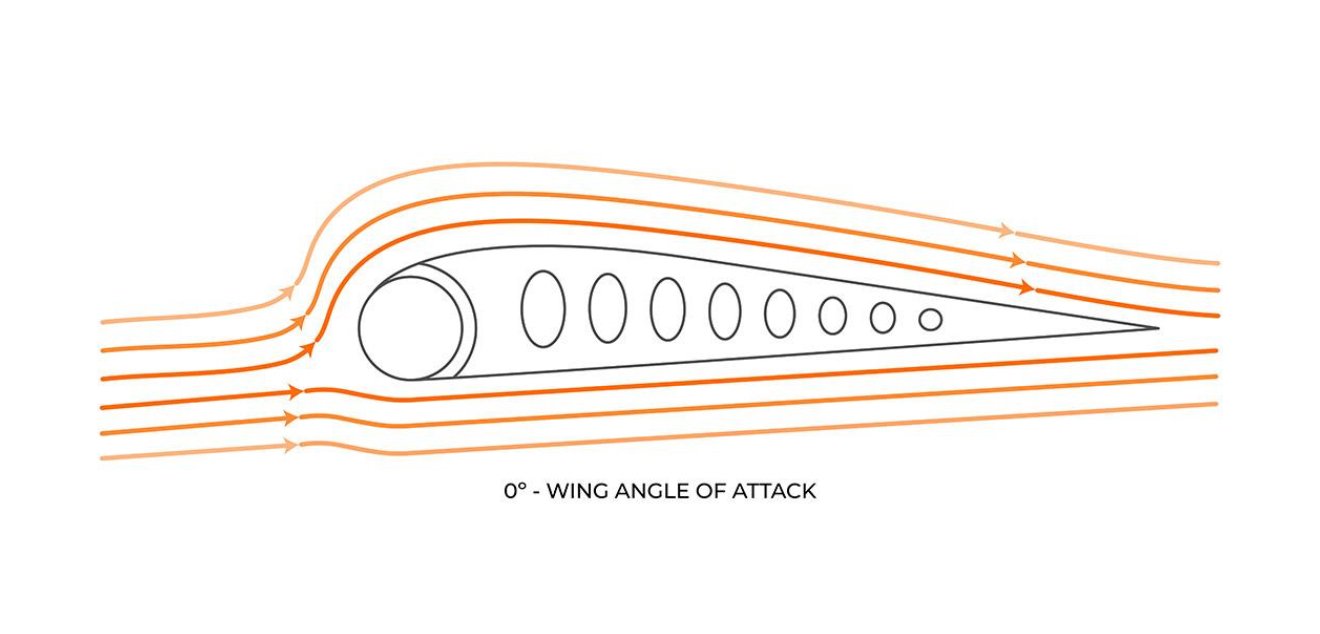
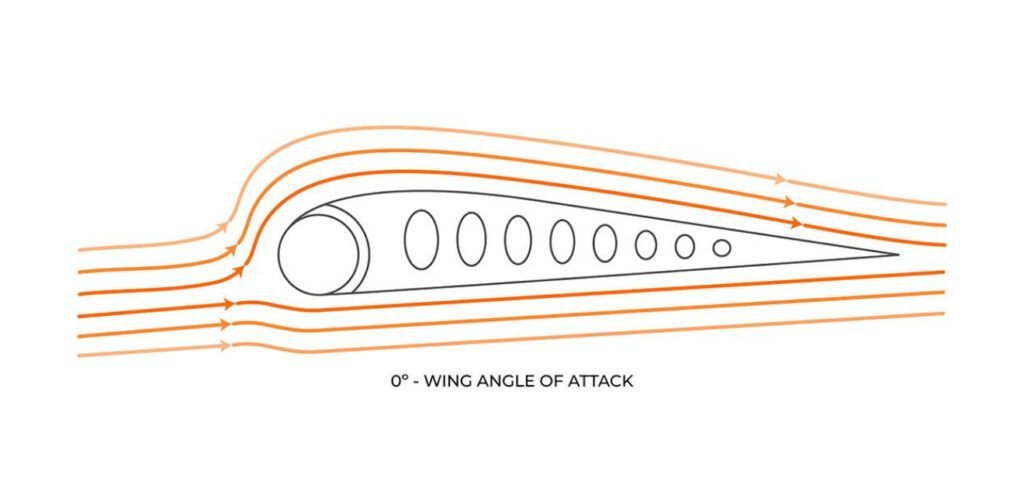
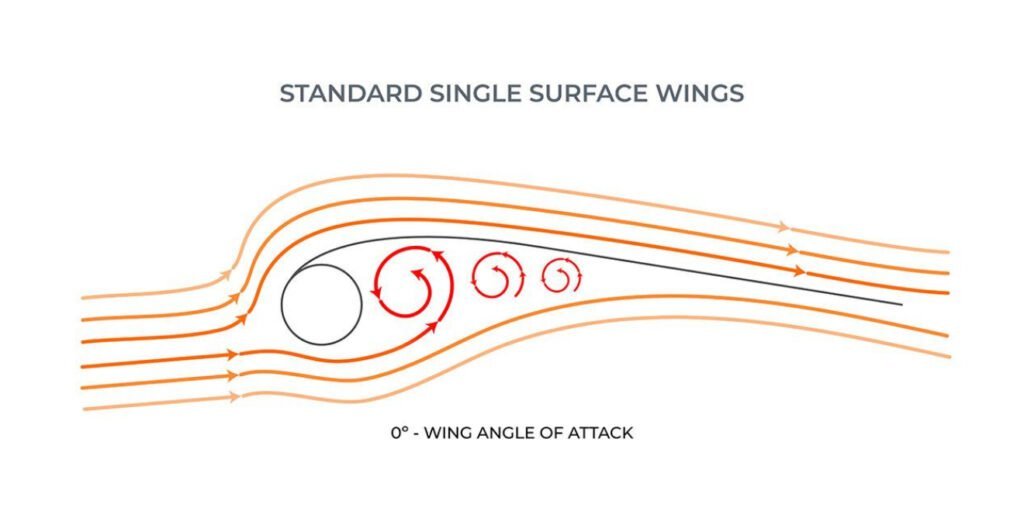
I ride Ozone Fusion wings with double skin technology. This is currently the most advanced gear on the market—it’s designed to reduce turbulence. The wing is more stable, holds its shape better, and allows for sharper upwind angles.
https://www.alpinefoil.com/en/kitefoil-windfoil-store/sails/ozone-fusion-eng.html
For me, the feeling of riding them is just much better. While many people say they’re harder to handle, I think it’s just a matter of getting used to them. Personally, I find it easier to ride double skins than traditional wings.
The problem is availability and cost. This gear is expensive and harder to get, which could limit the development of the class. Last season, organizers were seriously considering banning double skins from Foil Formula races because of concerns we’d repeat what happened with kite foil—where high costs and lack of newcomers caused the whole discipline to almost disappear.
But that’s not what we want. We want to attract new riders, build a strong community, and create room for sponsors. The sport should be accessible. Sometimes it might be worth sacrificing a bit of speed and tech in favor of growth and popularity.
What do you think? Is maximum performance more important, or is it better to prioritize accessibility and development of the sport?
4. What kind of foils do you use?
The foil market has exploded in recent years—many companies are now producing wings that resemble airplane parts, just miniaturized. Full carbon, small wings. But when it comes to top-level racing and performance, only a few companies are really on point because the gear needs to be extremely precise. One of them is Chubanga. Their foils are made in San Marino. I work with the owner, Luca, to create new designs and test the equipment. To me, these foils have soul—they’re incredibly refined. Luca fine-tunes every detail and personally perfects each unit by hand.
5. What kind of boards do you use?
The boards I ride are built together with Jacek Woźniak from AttackBoards. It’s more than just gear—it’s a part of my setup made with passion. We design them together, and Jacek crafts each board by hand with amazing precision. He’s got the eye, the feel, and real talent. And soon we’ll be launching a collection of new models available to everyone!
6. Do you use stock gear or do you tweak your setup?
In races, I try to use equipment that is widely available so that everyone has a chance to compete on the same technical level. During training, we are still testing various solutions and combinations to develop a setup that will not only be fast but also accessible and optimal for the future. The goal is for the sport to develop and remain fair for everyone.
My favorite spot will always be Sopot in the summer. It’s the place where everything began, and I hold it deeply in my heart. I also love those rare days when big waves appear in the open Baltic Sea; they occur a few times a year in Sopot, and on those days, all the surfers, whether present or local, share the waves near the house.
Outside of Poland, it’s hard for me to pick a single favorite spot, because each one has something unique. This winter, I caught the biggest waves of my life on a wingfoil at Arte Vida in Tarifa. In Jericoacoara, Brazil, I had incredible sessions at a local wave spot, and in Hawaii, at Hawaii Kai, I surfed on the reef, and these experiences will stay with me for a long time.
Any spot can be my favorite, it all depends on the conditions and the atmosphere of the place.
8. You race in Race, but do other forms of Wing also excite you? Jumps? Wave?
Absolutely everything related to wing excites me. Outside of the racing season, whenever waves appear, I immediately jump into wave. This is where my love for wing began, with fun on the waves, pure joy, and freedom.
But by nature, I am a perfectionist, and I have a strong need for competition. That’s why race is especially close to my heart. Thanks to my experience in sailing and windsurfing, where tactics, precision, and consistency matter, I feel most at home in this format. However, wave and jumps also bring me immense joy and are a great escape from the racing routine.
9. What is your favorite equipment setup for each discipline –
race/freestyle/wave?
In race, I focus on maximum speed. I ride Chubanga V4 foils with a 540 front wing and a V5 mast, along with a custom board from Attack Boards, created specifically for my needs.
In freestyle and wave, what matters is lightness, maneuverability, and feel, so I choose the smallest possible front wing. For several years, my favorite setup was the Escape 630 from F-One with an 85HM mast and a Rocket Wing S 58L board. I also pick the smallest wing, so the stronger the wind, the better. This setup gives the most fun on the waves and with jumps.
10. What advice would you give to those starting their Wing journey?
If someone wants to start their wing journey, it depends on their experience. If they know the basics of sailing, understand how the wind works, and can sail in a glide on a windsurfing board, they can immediately buy equipment tailored to them. In this case, I recommend a board with a volume equal to their weight plus about 10 to 20 liters, a foil with a front wing around 1500 square centimeters, and a mast length of 75 centimeters. Two wings of 4 and 5 meters are a good choice. This setup works in most conditions. People weighing over 90 kg can consider a 6-meter wing, especially for lighter winds in Poland. On the other hand, lighter people, below 70 kg, will do well with a 5-meter wing.
If someone has no experience on the water, the best solution is to start learning in the summer in Chałupy or even in Sopot. There, you can rent equipment and take a few lessons with an instructor on a SUP board. This method allows you to get used to the wing, feel it for the first time, and understand how it works in safe conditions. After that, you can move to a board with a larger volume, around 200 liters, a short mast of 40 to 50 centimeters, and a large foil that allows you to glide slower and more steadily. It all relies on the parts method of training, gradually introducing new elements – from mastering the wing in hand to the first glides on the foil.
In my case, having a lot of experience with windsurfing and sailing, I was able to start and do my first tack on the first day. But everyone has their own path. The most important thing is not to get discouraged at the beginning but to build your skills step by step. Wing brings incredible joy, and the path to gliding can be fast if we approach it with patience.
11. What advice would you give to people who wing on weekends and want to make progress?
For people who wing on weekends and want to make progress, the most important thing is the approach. In my case, it all started with pure fun. At first, I was totally hooked because there was so much I wanted to learn. Turns, tacks with wing transitions – in front, over the head – tricks, first 360s, jumps, the highest flights, riding without a wing, just levitating, coming down from a wave.
It all made every session different, and I could come up with new exercises each time. If someone has limited time on the water, it’s worth making the most of every moment. It’s nice to set small goals for a session, learn step by step, and not try to do everything at once. Wing offers endless possibilities, and the greatest progress comes when you simply enjoy every meter on the water.
12. What advice would you give to young Wing athletes who want to follow in your footsteps?
For young athletes who want to go down my path, the most important advice is to start with solid basics and not expect sponsorship support right away. At first, I learned on my own. In between my IQ Foil training, I would hop on a wing and test everything step by step. First, you need to master the foil, learn tacks and gybes, and feel the balance and control.
The next step is your own equipment. I know not everyone can afford it, but it’s a crucial moment. At first, I also tried to get gear from brands, but it ended up that I had to invest my own money. I bought the entire setup, put everything on the line, and started competing.
I remember one of my first international competition trips to China. At that time, I only had one foil, one mast, and one wing. There was a lot of debris in the water, and I focused entirely on not hitting anything that could damage my equipment. If something had happened, I wouldn’t have been able to continue the season. It was a crucial event where I won my first World Cup medal in wing. Without results, there wouldn’t have been a chance for further support. It was a lot of stress and risk, but also an important lesson.
So my advice is: first, learn to ride well, then invest in equipment, and only later look for support. Sponsors will come when they see your dedication and results. There are no shortcuts, but anything is possible if you really want it.
13. Have you measured the maximum speed you’ve reached?
Over 60 km/h
14. What are your plans and goals for this season?
Become world champion in race
15. When will we see Wing in the Olympic Games?
Potentially Brisbane 2032